

Why Is Slab-on-Grade Construction Used for Commercial Buildings?
Slab-on-grade construction is one of the most reliable and cost effective foundation systems for commercial and industrial buildings. A properly constructed concrete slab provides exceptional strength, durability and stability, making it ideal for facilities that experience heavy equipment, vehicle traffic and daily operational demands.
At Dycor Builders, we specialize in designing and constructing high quality slab-on-grade foundations that support the long term performance of commercial, industrial and institutional buildings throughout the Okanagan.
What Is a Slab-on-Grade Foundation?
A slab-on-grade foundation is a reinforced concrete slab poured directly onto a carefully prepared and compacted ground surface. Unlike elevated floor systems, the slab rests directly on the soil, creating a stable and durable foundation for the structure above.
Slab-on-grade construction is commonly used for:
- Warehouses
- Industrial facilities
- Commercial buildings
- Retail developments
- Manufacturing plants
- Storage facilities
- Equipment buildings
- Agricultural structures
When properly engineered and installed, a slab-on-grade foundation provides decades of reliable performance with minimal maintenance.
How Is a Slab-on-Grade Constructed?
Building a high quality slab-on-grade foundation requires careful planning, precision and attention to detail throughout every stage of construction.
Site Preparation and Ground Compaction
The first step is preparing the building site through excavation, grading and soil compaction.
Proper site preparation creates a stable base capable of supporting the weight of the concrete slab and the structure above it. This process also helps reduce the risk of future settlement, cracking and uneven floor surfaces.
Depending on site conditions, engineered fill or additional compaction may be required to achieve the required load bearing capacity.
Reinforcement Installation
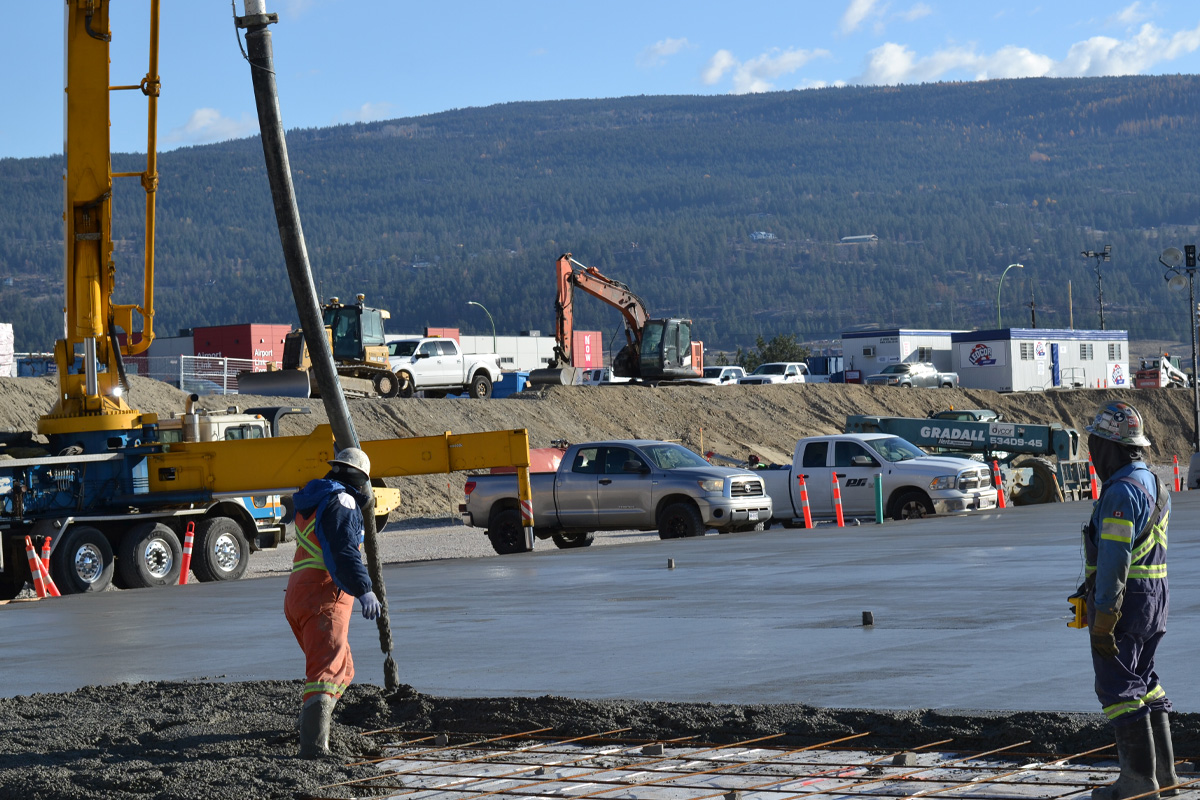
Steel reinforcing bars (rebar) or welded wire reinforcement are installed within the slab to improve its structural strength and resistance to cracking.
Proper reinforcement helps distribute loads evenly across the slab and allows it to withstand heavy equipment, forklifts, storage systems and continuous vehicle traffic commonly found in commercial and industrial facilities.
Concrete Placement and Finishing
Concrete placement is a critical phase that directly impacts the long term performance of the slab.
Professional concrete crews carefully place, level, and finish the concrete to achieve the required thickness, flatness and surface quality. Proper curing techniques allow the concrete to reach its full design strength while reducing shrinkage and surface defects.
The finished surface can be customized to meet the specific operational needs of each facility, including smooth, broom or specialty finishes.
What Are the Benefits of Slab-on-Grade Construction?
Slab-on-grade foundations offer numerous advantages that make them one of the most popular choices for commercial construction.
Exceptional Strength and Durability
Reinforced concrete slabs are designed to support heavy structural loads, machinery, storage systems and continuous traffic while maintaining long term performance.
Cost Effective Construction
Because the slab serves as both the foundation and finished floor structure, slab-on-grade construction often reduces overall construction costs compared to elevated floor systems.
Faster Construction Schedules
Once the site has been properly prepared, slab-on-grade foundations can often be completed more quickly than other structural floor systems, helping projects stay on schedule.
Low Maintenance Requirements
Concrete slabs require minimal maintenance and provide excellent resistance to moisture, pests and everyday wear when properly constructed.
Design Flexibility
Slab-on-grade systems can be engineered to accommodate a wide range of commercial, industrial, agricultural and institutional building designs.
Which Buildings Benefit Most from Slab-on-Grade Foundations?
Slab-on-grade construction is an excellent choice for many types of facilities, including:
- Warehouses and distribution centres
- Manufacturing facilities
- Retail buildings
- Commercial office buildings
- Agricultural buildings
- Automotive facilities
- Equipment storage buildings
- Industrial plants
Each slab is designed to meet the specific structural requirements, loading conditions and operational demands of the project.
Why Choose Dycor Builders for Slab-on-Grade Construction?
Dycor Builders delivers professionally constructed slab-on-grade foundations built for strength, precision and long term performance.
From initial site preparation through final concrete finishing, our experienced team focuses on quality workmanship, dependable scheduling and attention to every detail.
Whether you’re constructing a warehouse, commercial facility, manufacturing plant or industrial building, we build concrete slab systems that provide a strong foundation for your business.
Building Durable Commercial Foundations Across the Okanagan
Dycor Builders proudly provides slab-on-grade construction services throughout the Okanagan for commercial and industrial projects of all sizes.
Our commitment to precision, quality materials and proven construction methods ensures every slab is built to perform for decades.
A strong building begins with a strong foundation, and every successful project starts from the ground up.
Frequently Asked Questions About Slab-on-Grade Construction
What is a slab-on-grade foundation?
A slab-on-grade foundation is a reinforced concrete slab poured directly onto a prepared and compacted ground surface to create a durable structural foundation and floor.
Is slab-on-grade construction suitable for commercial buildings?
Yes. Slab-on-grade construction is widely used for commercial, industrial, retail and warehouse buildings because it provides excellent strength, durability and cost effectiveness.
How thick is a commercial concrete slab?
The thickness varies depending on the building’s design and anticipated loads. Commercial slabs are engineered according to building codes and project specific structural requirements.
What are the advantages of slab-on-grade construction?
The primary advantages include lower construction costs, faster installation, long term durability, minimal maintenance and excellent load carrying capacity.
How long does a concrete slab-on-grade foundation last?
A properly designed and professionally constructed reinforced concrete slab can provide reliable performance for 75 years or more with proper maintenance.